Australia’s desert regions support a diverse range of terrestrial vertebrate fauna, including mammals, reptiles, and amphibians. Although these environments are characterised by low rainfall and high temperatures, many species have evolved specialised adaptations that allow them to survive and reproduce under arid conditions.
Desert Discovery conducts fauna surveys using a range of catch-and-release trapping methods as well as passive or remote survey techniques to survey mammals, reptiles and amphibians. All of our surveys are designed to maximise survey accuracy and robustness while minimising stress, disturbance, and risk to animals.
Scientific research permits are obtained from the relevant State government authorities, and all projects and associated methodologies are reviewed and approved by an independent Animal Ethics Committee in accordance with established animal welfare standards.
Mammals
Mammals are vertebrate animals that have mammary glands which produce milk to feed their young. Mammals are divided into three major groups: monotremes, marsupials, and placental mammals.
Monotremes are egg-laying mammals and share some features with reptiles. Only two monotreme species exist today: the echidna and the platypus. Platypuses live in rivers and streams, while echidnas are found across much of Australia, including desert regions.
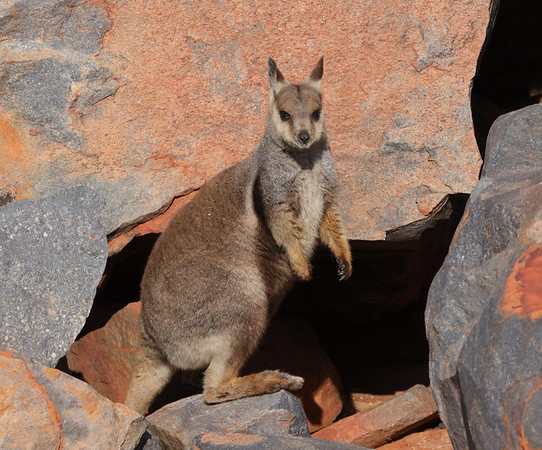
Marsupials give birth to very small, underdeveloped young. These young continue their development in a pouch, where they feed on their mother’s milk before gradually venturing out. The largest marsupial is the red kangaroo, which inhabits Australia’s deserts. Its energy-efficient hopping and ability to survive long periods without drinking water make it well adapted to arid environments.
Placental mammals develop their young inside the womb until a relatively advanced stage. This group includes dingoes, rats, mice, bats, and humans.
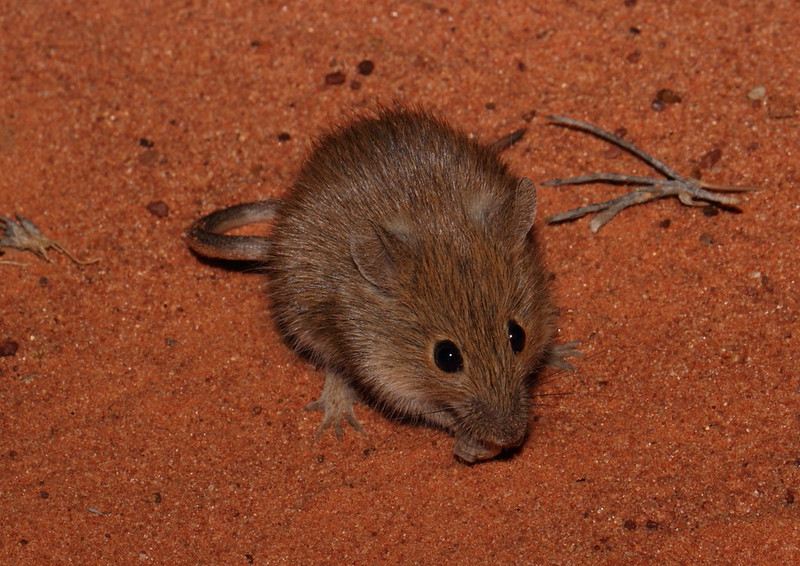
Most desert mammals are small-bodied, a trait that reduces water and energy requirements. Many obtain much of their necessary water from food rather than direct drinking. Desert mammals are often nocturnal and cryptic, meaning they are rarely seen, and are therefore surveyed using trapping methods and remote infrared camera systems that detect heat and movement.
Reptiles
Reptiles are ectothermic (cold-blooded) vertebrates. Most lay eggs, although some species give birth to live young. The main groups of reptiles are crocodiles, turtles, lizards, and snakes.
In Australia, turtles and crocodiles are mostly restricted to waterways, while the arid interior is home to a wide variety of lizards and snakes.
Australian lizards are especially diverse and include several groups:
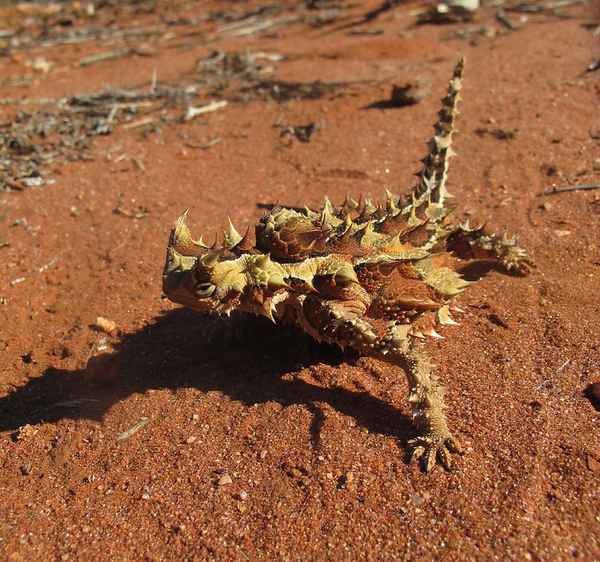
Dragons, such as the frill-necked lizard and the thorny devil. The thorny devil, shown here, is covered in spine-like scales and can collect water across its body, channelling it along the grooves between its scales to its mouth—even from damp ground or a shallow puddle.
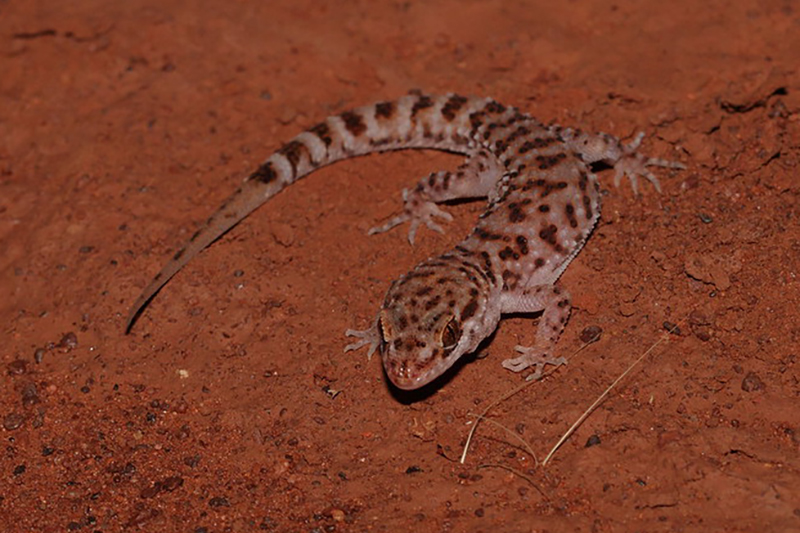
Geckos, are a diverse group. Some have very soft skin and other have skin covered in rough, pointy tubercles and hard bumps. The Bynoe’s gecko shown here, can reproduce through parthenogenesis, meaning females can produce offspring without mating.
Goannas, such as the large, carnivorous perentie—the second-largest goanna in the world—which can grow over 2 metres long.
Legless lizards, which resemble snakes but can be identified by their lizard-like heads and tiny, vestigial hind limbs.
Skinks, including blue-tongue lizards, the largest skinks in Australia. These omnivores give birth to relatively large live young.
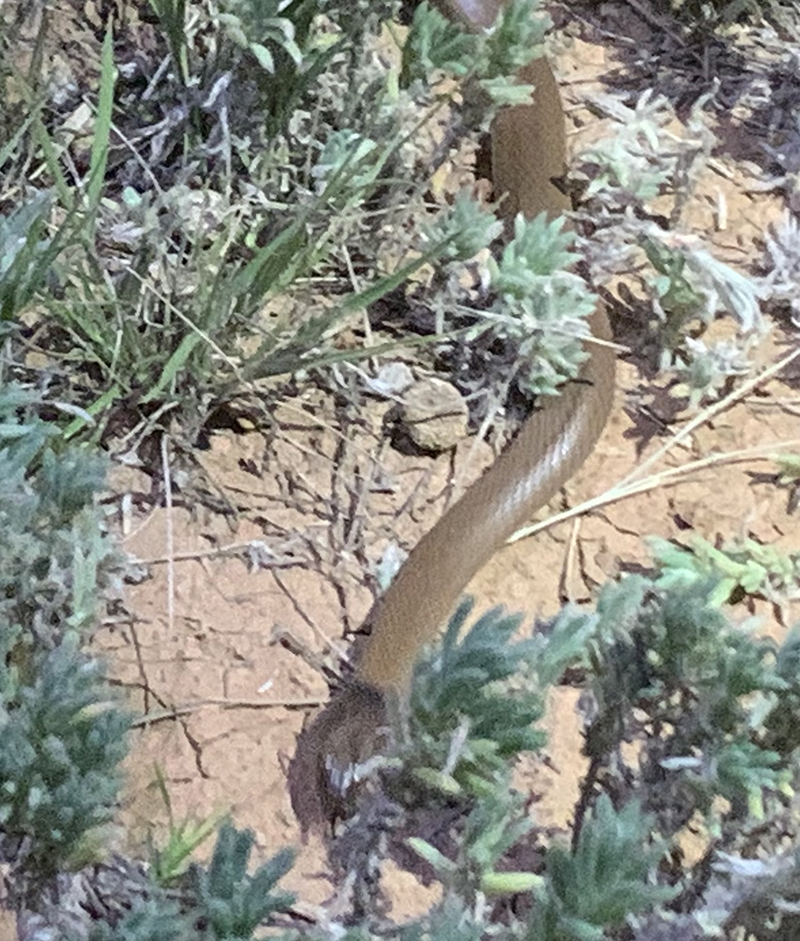
Snakes. Australia is well known for its venomous snakes, including the inland taipan. The high toxicity of their venom reflects their diet, which often includes frogs and lizards. While extremely dangerous to humans, the venom is well suited to subduing their natural prey. Many Australian snakes pose little risk, including non-venomous pythons and subterranean blind snakes that primarily consume ants and termites.
Amphibians
Amphibians are ectothermic vertebrates with smooth, permeable skin. Most species lay eggs in water, and their life cycle includes an aquatic larval stage followed by metamorphosis into an adult.
Australia’s native amphibians consist almost entirely of frogs. Despite their close association with water, numerous frog species are adapted to arid environments. Desert frogs survive prolonged dry periods by burrowing underground and entering aestivation, a dormant state that can last months or even years.
Arid-adapted frogs include water-holding frogs that store water internally, burrowing frogs that dig into soil using hardened foot structures, and tree frogs capable of tolerating drier conditions. Following significant rainfall, frogs emerge rapidly to feed and breed in temporary pools, where larval development occurs quickly before the water evaporates.
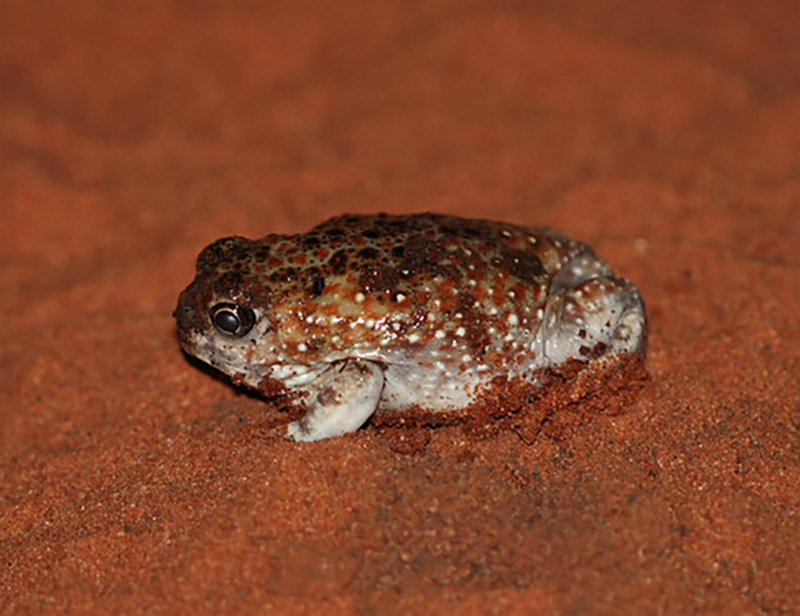
Because desert amphibians are only active after rain and are often hidden underground, they are rarely seen. Scientists usually survey them by listening for their distinctive breeding calls at night, rather than by trapping or visual searches.

