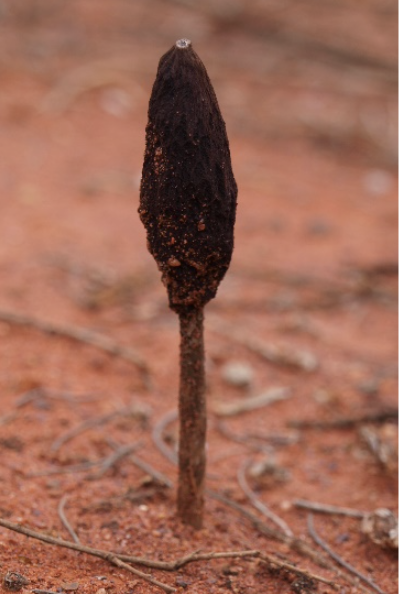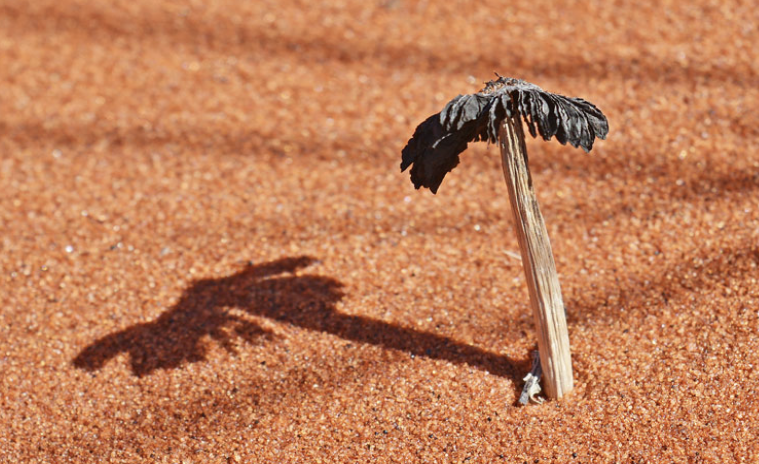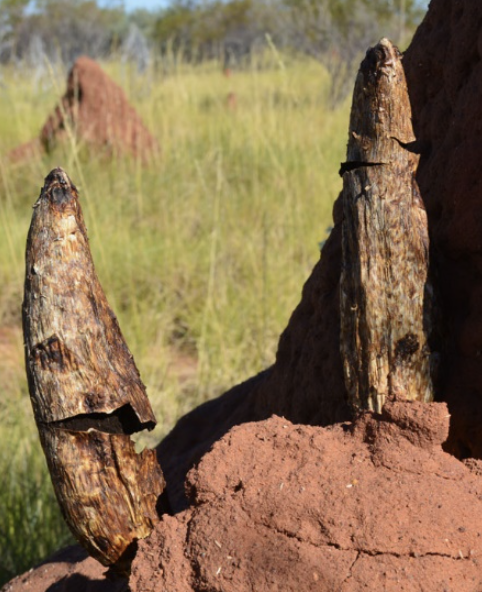
Fungi are present throughout most organic material in the environment – such as wood, plant litter, humus, soil, dung and carcases – and play important roles in the ecology of natural ecosystems. Through the processes of decay they are recyclers of organic material, releasing nutrients back into the soil. Symbiotic relationships between fungi and the roots of plants ensure the survival of both. They are critical food sources for many native mammals, reptiles and invertebrates.
While some species of fungus (such as those depicted here) are robust and can persist in harsh desert environments, the ephemeral nature of the fruit-bodies of most species means that finding them is largely serendipitous and depends on a search coinciding with their location, their emergence and before they deteriorate or are consumed.
Where possible, surveys include a range of vegetation types and are conducted by the conventional head-bowed wandering walk of the amateur mycologist supported by eagle-eyed associates.
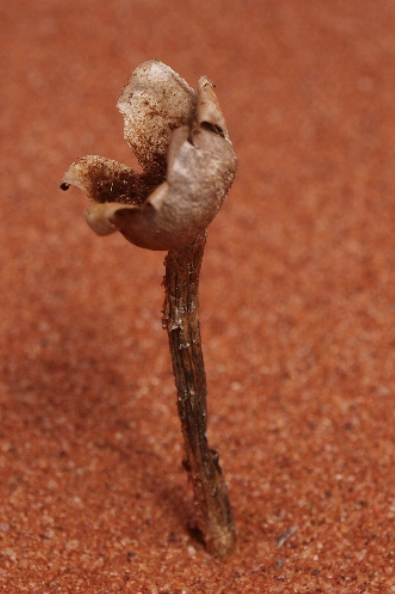
Recording fungi is similar to that for plant species. However, as well as noting the scientific name (if known), general locality, date, geo-location and vegetation type in which the fungus is found, the substrate on which the fungus is growing is also recorded as well as the identity of the nearest tree/shrub – which may help in future studies of mycorrhizal associations. In situ photographs are taken as well as any other photos that may help with identification.
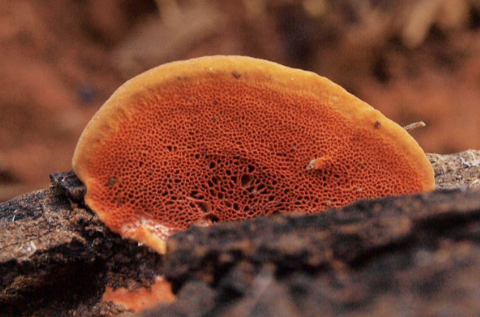
Although the ‘fungus team’ comprises only a couple of people, other Desert Discovery participants often draw attention to sightings or bring samples of fungi in to the base camp.
Collection Permits are obtained prior to each Desert Discovery project and specimens have been lodged with the West Australian Herbarium. As no mycologist is currently attached to the WA Herbarium, the advice of mycologists in the National Herbarium in Victoria is often sought in identifying species.
It is not common for biological surveys to include fungi so the citizen-scientist Desert Discovery program has provided the opportunity to substantially extend the known ranges of many species as well as to discover new ones. The data are also recorded on the Fungimap and iNaturalist websites.